The time had come, once again to purge the bookshelves. According to the database that indexes my cookbook collection, I have 54,000 recipes at my fingertips. If I made one recipe every single day, it would take me 148 years to get through all these cookbooks. So, away some of them must go. I have done this before, I am more comfortable with letting go of books than I used to be, and I have a system for making decisions in my living library.
First, there are the books that do not have added value in someone else’s life. A couple of examples- My mother self-published a couple of family cookbooks that are full of recipes, pictures, and stories about my grandparents, aunts, uncles, and everyone else. A copy of Better Homes and Gardens from 1989 that has the recipe for Pumpkin Raisin Tart I make every Thanksgiving; this probably would go to the recycling bin for almost anyone else. These, and a handful of other books belong in the “don’t think about it” category, books that have more meaning to me than they ever could for someone else, so here they stay.
The easiest books to get rid of are the free ones or real cheapies from the thrift shop, books I looked at the day I bought them, then were put on the shelf until the day they went back to the thrift shop, ready for some other bargain hunting enthusiast. There is one book that I’ve purchased and given back three times. It’s an Italian cookbook that has a pretty cover and is revered, but I never use it, and it bores me to read for some reason. (Benji, please remember this, you don’t like this book!).
Which leaves us in the murky middle world; this is where the work needs to happen. A long list of cookbooks that need putting through their paces, then in or out. These books are separated into categories- 1.Books I have read but never cooked from 2. Books I’ve had a bad experience with because of something I did or that happened, but I still like the book but now I am afraid of. 3. Reprints of old cookbooks that may be great, but the recipes need to be translated to today words and methods and 4. books I have never cooked from or read or even casually looked at.
I will put these books in a pile and, one by one, make several recipes from each of them. I went to the shelf and got started. The first book I pulled actually meets all three criteria above. The Auberge of the Flowering Hearth by Roy Andries de Groot.
Groot was an interesting fella. He is remembered as a food and wine writer, but before that he was a reporter for the BBC, and suffered serious eye injuries while covering the Blitz. By the time he published Auberge, he was completely blind.
Now Groot has written another book, Feasts for All Seasons, which was for me, what’s the word I can’t think of, it’s not kryptonite, or waterloo, but you know, I was intimidated and discouraged by its strangeness and complexity. The dishes and methods are unusual, and his language is specific but florid, poetic. He might write a sentence like this: The pheasant must be cooked for exactly 16 minutes to 150.1 degrees and not more, then rested on an unvarnished solid oak table top (not stainless steel or worse! travertine) for 11 minutes and not a second more, or the angelic vapor of peach and freshly tanned leather will have evaporated into the ether, carried aloft by the East Wind, and all your work will be for nought.
I find that intimidating.
The Auberge is his most famous work, and is a beloved memoir considered by many to be one of the best books about food of all time ever in the whole history of humanity. The Auberge was also an inn in the Savoy region of France, where Groot had gone to research and write about the famed local liqueur, Chartreuse. He ended up writing a book about the Inn itself, and the second half of the book is devoted to recipes for the many dishes he enjoyed while there. Or so he claims. Apparently his book inspired many people to visit the Auberge, and a number of them wrote to Groot to say that their experience was nothing like what was described in the book. Groot replied that much of the book had come from his imagination, and that it is really the spirit of the thing that counts. I didn’t know this until after I had made a meal from it, but let’s get to that now.
The Menu: Ratatouille Whole Wheat Walnut Bread
Pot Roast Beef in the style of Marseille
Raspberry Cream Tart
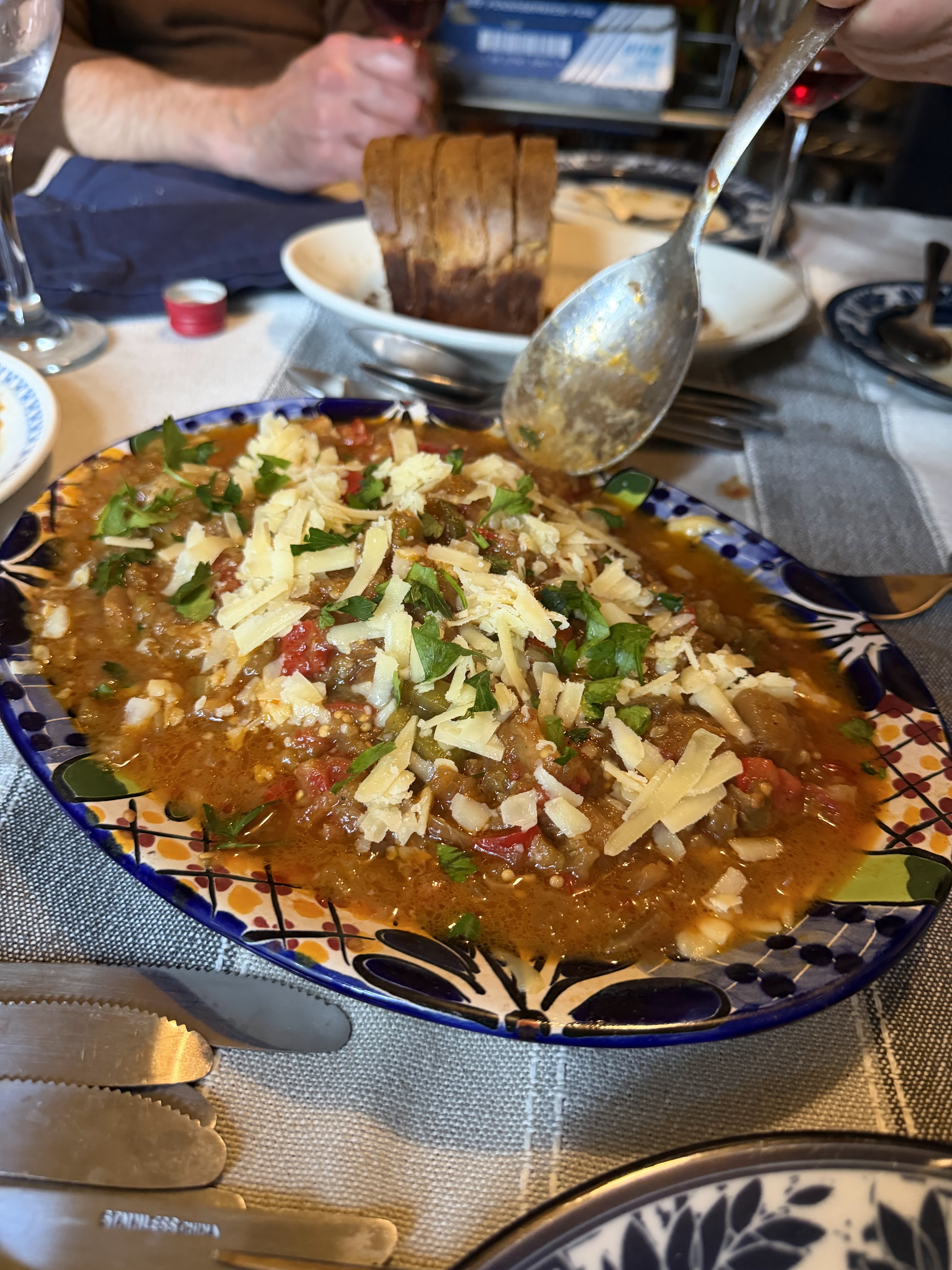
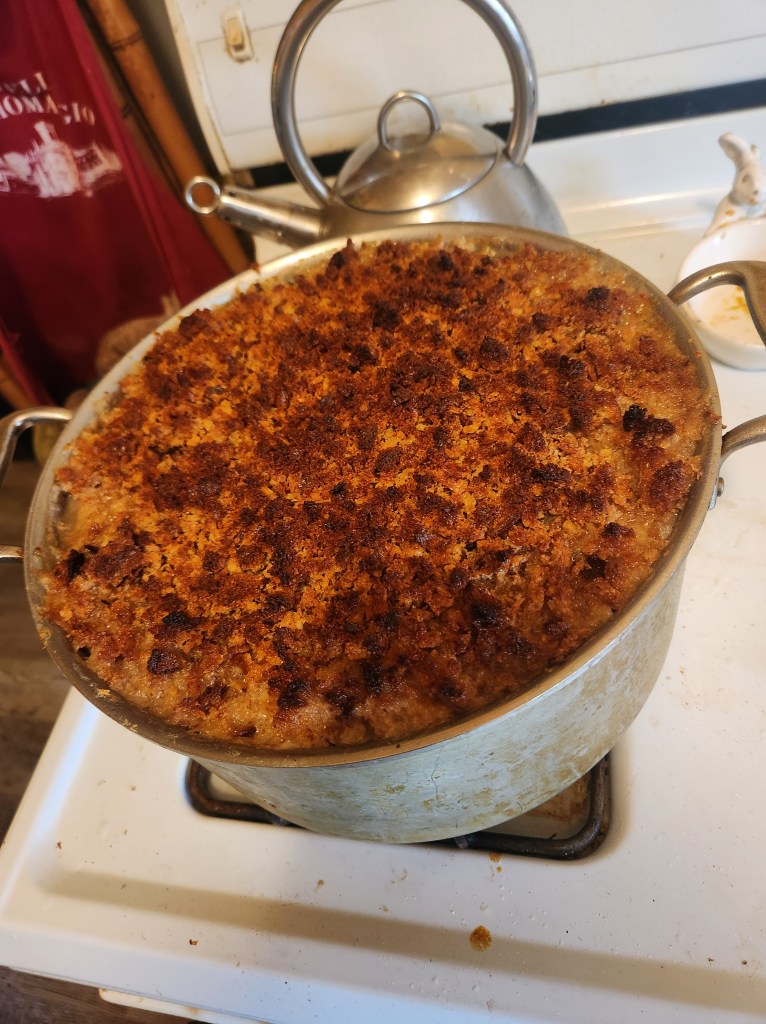
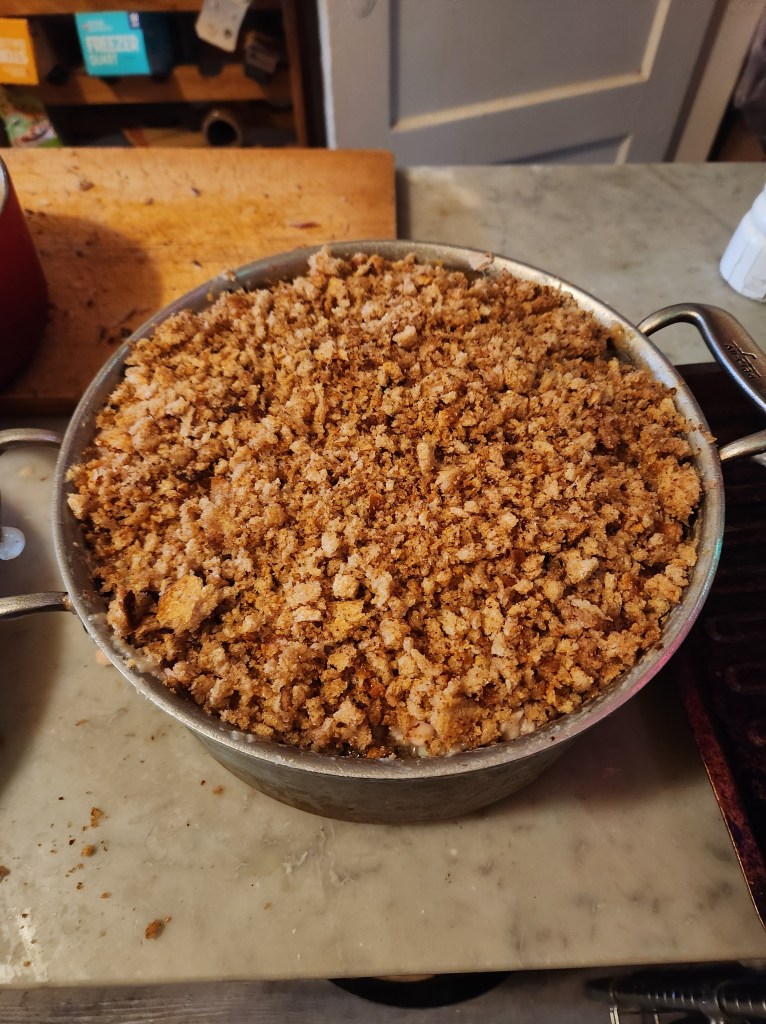
There seem to be as many recipes for Ratatouille as there are rats in Paris, and this one was incredibly simple and recommended covering it with Gruyere cheese, which we did, with no regrets. I think it was cooked for three hours. Tons of olive oil, eggplant, tomatoes, onions, garlic, and parsley. Great. We scooped it onto slices of the whole wheat bread, seen in the background. Wonderful. Good on Groot!
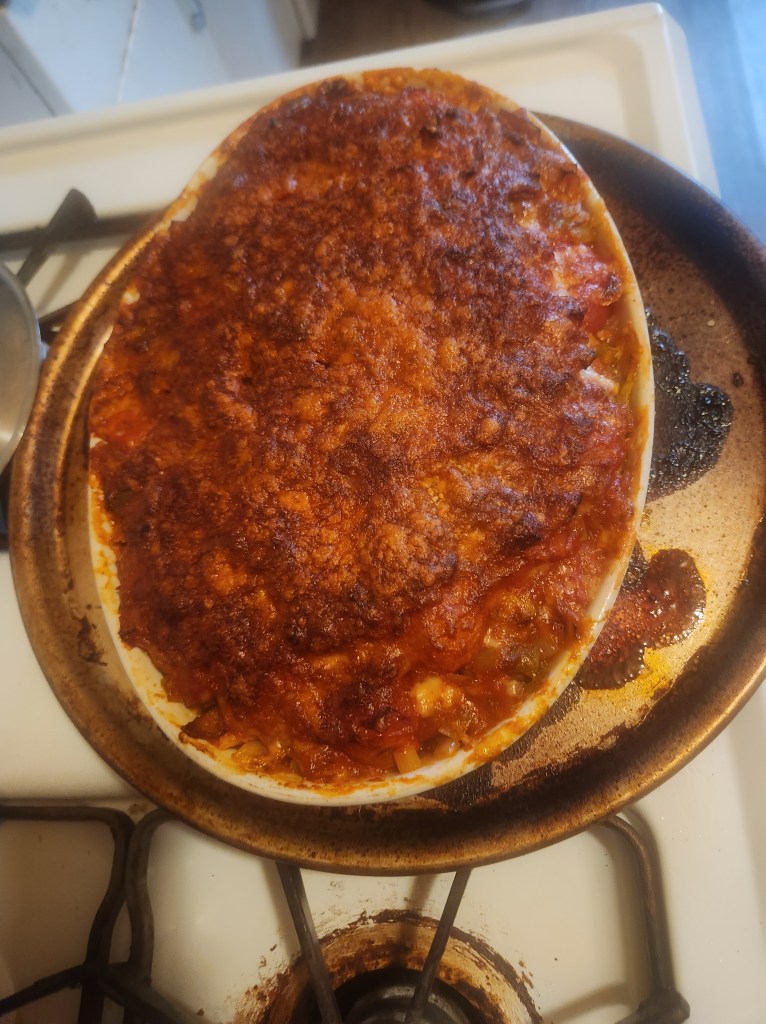
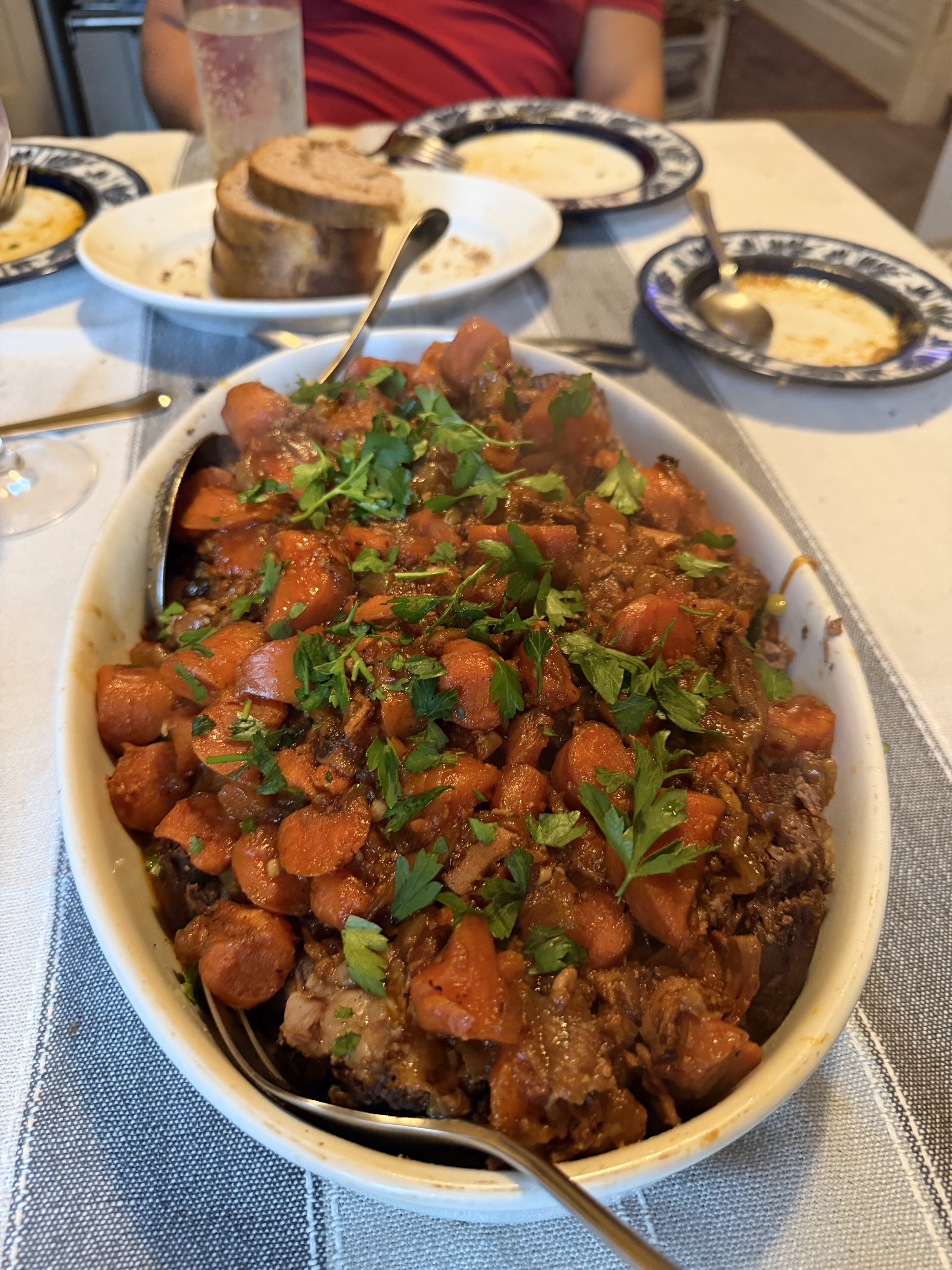
Next we tried the Pot Roast Beef Marseille style. Here’s an example of what I’m talking about. The recipe itself is unusual. What makes it unusual? It includes lardons that have been marinated in blackberry brandy, and is finished with chopped mixed olives. This is what makes it Marseille, I read. Those seem like competing flavors to me, and I’ve never had that pair in one dish before. His instructions are unusual, by which I mean, wrong. Example-although he suggests a chuck roast, he insists that it not be cooked to higher than 140F or the essential essence or whatever will be ruined and lost forever. If we cooked that roast to only 140F, we’d still be chewing on basically raw meat, essential essence be damned! The result of all this is that I cooked it for 4 hours, until the inside registered 195F, and it was delicious, although I wondered what, if anything, was lost in its “magical” flavor. We’ll never know. We could definitely taste the blackberry in the background, but also all those olives with their salty muskiness. It was old-world tasting, like what fairy tale characters might eat, or what old movies smell like.
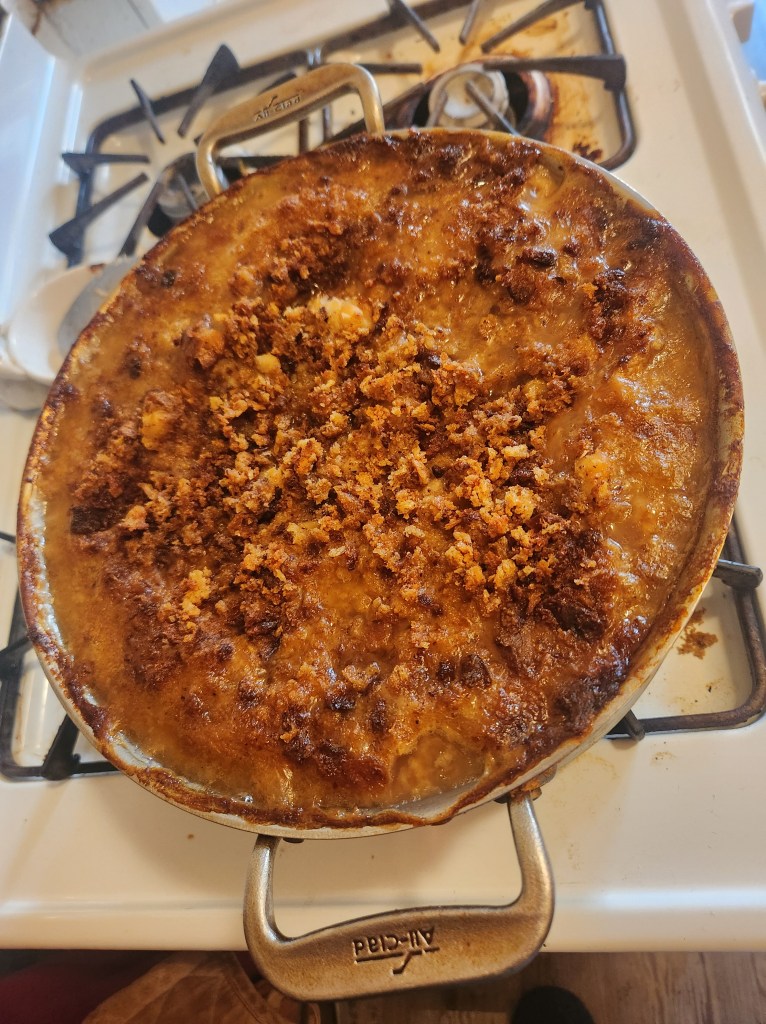
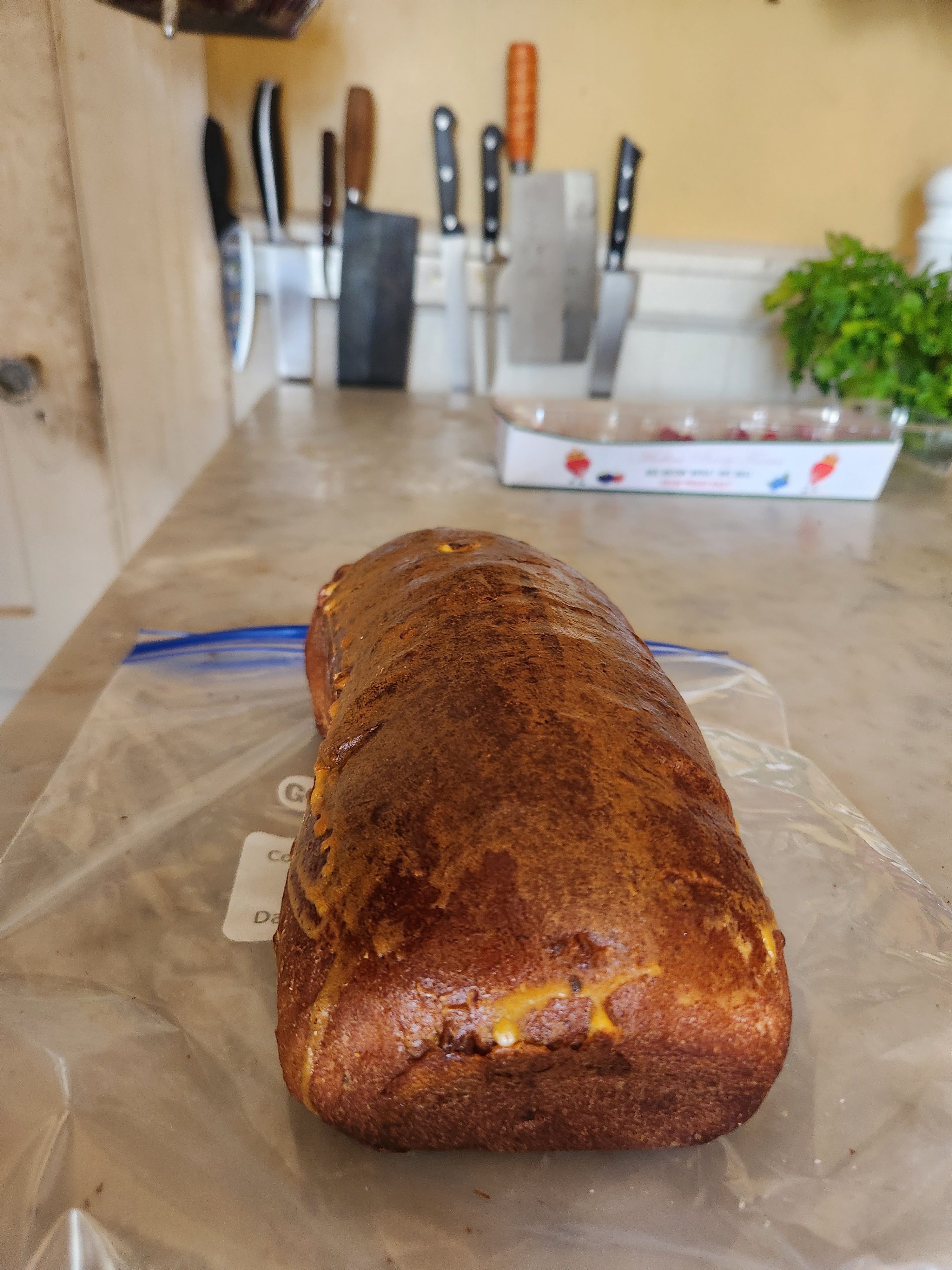
Finally, the tart. The recipe again, language. He keeps describing the preparation as a pastry, and I’m thinking French pastry, with cold butter worked in layers alternately with flour dough. Except this one has yeast and needs to rise. The kitchen must be between 65F-70F so that the yeast can rise without the butter softening or melting. Well, no way, you crazy nut! The kneading process of course obliterated the butter and it was worked into the yeasty dough like Brioche, which is exactly what it was, not a pastry! It also had something he described as cream, which was really a light and almost unsweetened custard sauce. I was expecting disaster.
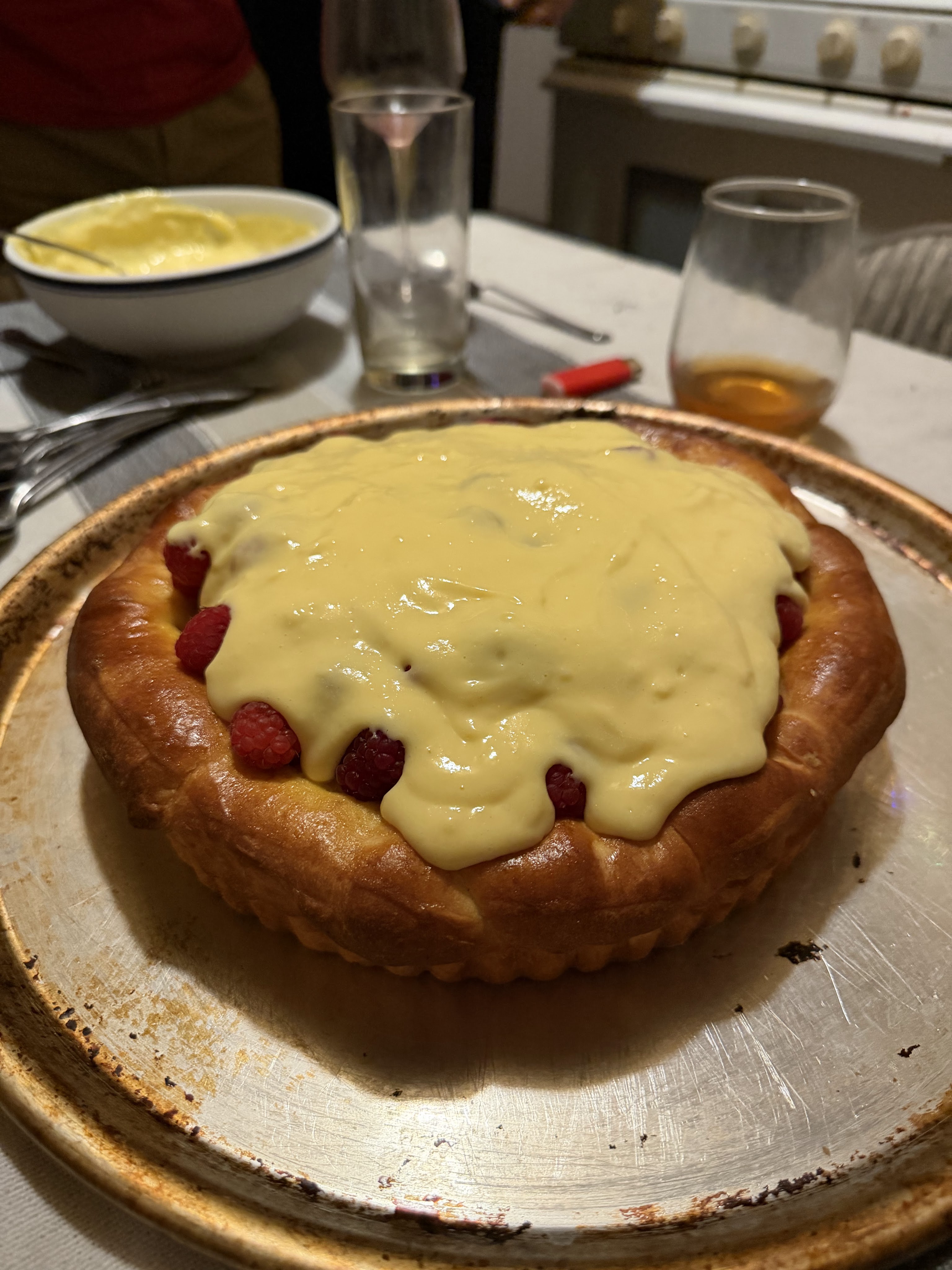
It was lovely, and you can see how the dough puffed up and looks a lot more like bread than pastry.
OK, so we enjoyed the food, the adventure and stories-from Groot in Savoy to Bachmann in San Francisco. I decided to keep the book, even though it has errors, not typos, but actual errors. Which means that the writing doesn’t have to be clear or even accurate to warrant a place in my cookbook library. What else could this mean?
It’s funny because I look at the pile of cookbooks going to the thrift shop and think that a few of them at least are better instructional cookbooks than The Auberge of the Flowering Hearth. I guess for me a great cookbook is more than recipes, and if the book itself sparks conversation, it might be worth saving.